Correct installation, device settings and user training can reduce unwanted activations, but no system eliminates every false alarm. Investigate repeated events and follow the manufacturer’s maintenance guidance.
Common Causes of False Alarms
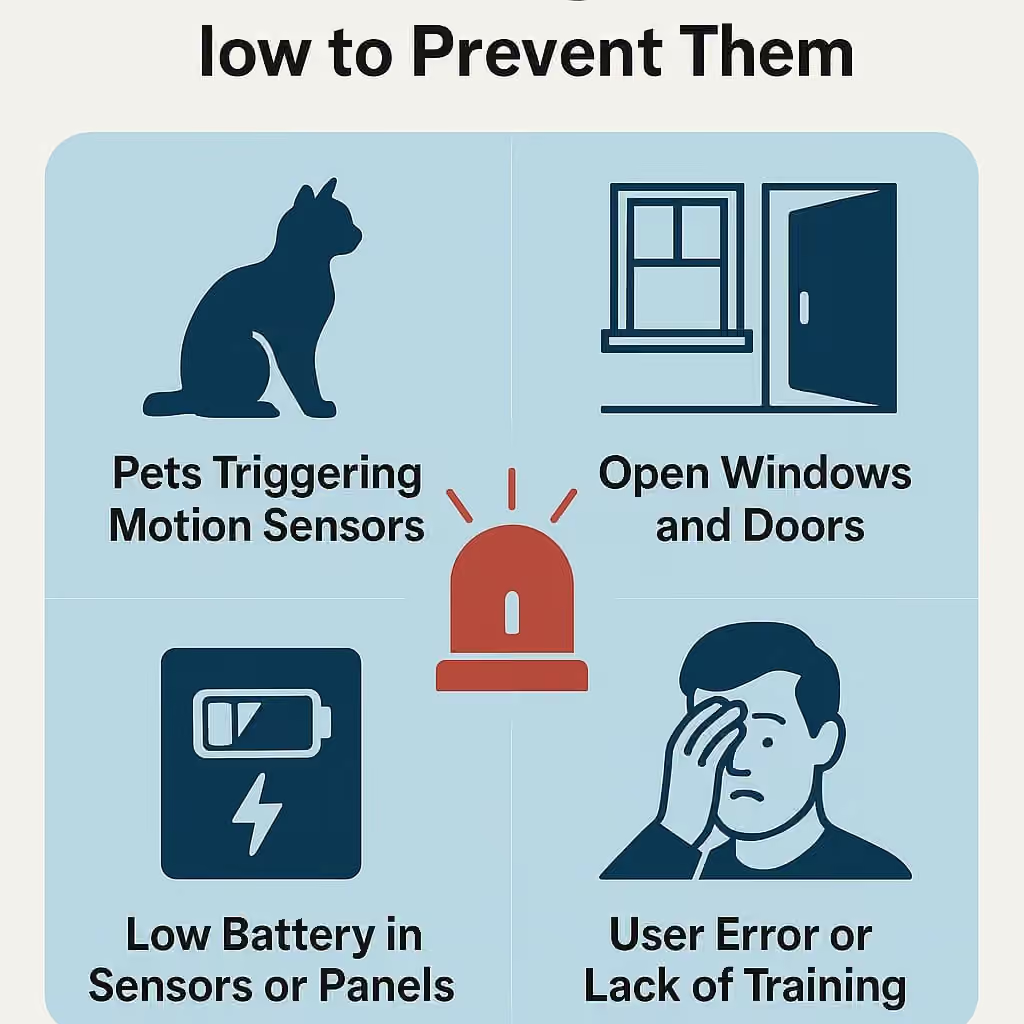
1. Pets Triggering Motion Sensors
One of the leading causes of false alarms is pets moving freely around the house. Motion sensors in many home alarm systems detect movement but may not always distinguish between a human and a small pet.
Solution:
Use pet-friendly motion detectors or install sensors in areas where your pets don’t usually go.
2. Open Windows and Doors
Windows and doors left ajar can allow curtains or hanging objects to move, which can trigger motion detectors. Even small drafts from poorly sealed areas can lead to false signals.
Solution:
Make sure all entry points are securely closed before arming your alarm system. Also, check for and seal drafts that might move objects in the room.
3. Low Battery in Sensors or Panels
Low battery power is often overlooked but can lead to sensor malfunctions or false signals.
Solution:
Regularly inspect your alarm system’s battery levels and replace them according to manufacturer recommendations to ensure stable performance.
4. Improper Sensor Installation
Solution:
Always rely on professional installation. A properly trained technician will place and calibrate sensors based on your home’s layout to reduce false alarms.
5. Insects and Environmental Interference
Bugs and other small pests crawling near or inside motion sensors can also set off alarms. Dust and debris can have a similar effect.
Solution:
Clean your sensors regularly and seal small openings in your home to keep insects out.
6. User Error or Lack of Training
Solution:
Train all users of the home alarm system including children and guests on how to operate it properly. Assign individual access codes to monitor and manage usage.
7. Objects Falling or Doors Slamming
Items falling off shelves, sudden movements, or even slamming doors can trigger motion detectors, especially if they’re placed too close to unstable objects.
Solution:
Keep the area around motion sensors clear, and secure any objects that could fall or move suddenly.
How to Minimize False Alarms in Your Home Alarm System
To reduce false alarms and improve your system’s reliability, consider the following:
-
Use pet-friendly motion sensors if you have animals at home.
-
Always double-check that all windows and doors are closed before arming your system.
-
Perform regular battery maintenance to avoid sensor malfunctions.
-
Invest in professional installation to optimize sensor placement.
-
Keep your sensors clean and free of insects or dust.
-
Educate all household members on proper system use and arm/disarm procedures.
-
Secure loose objects and minimize environmental disturbances near sensors.
-
Use a code that authorized users can manage without sharing it unnecessarily. Follow the panel and provider instructions for individual user codes where supported.
Distinguish Trouble Alerts from Alarm Activations
Use the panel event history to identify the event and zone. Battery or communication trouble requires a different check from an open-door alarm. Coordinate tests with the monitoring provider and follow model instructions.
For help planning the work, explore home alarm installation and contact Alarmto with your property and equipment details.
Related reading: Why Does My Alarm Keep Going Off? Common Causes and Fixes.