

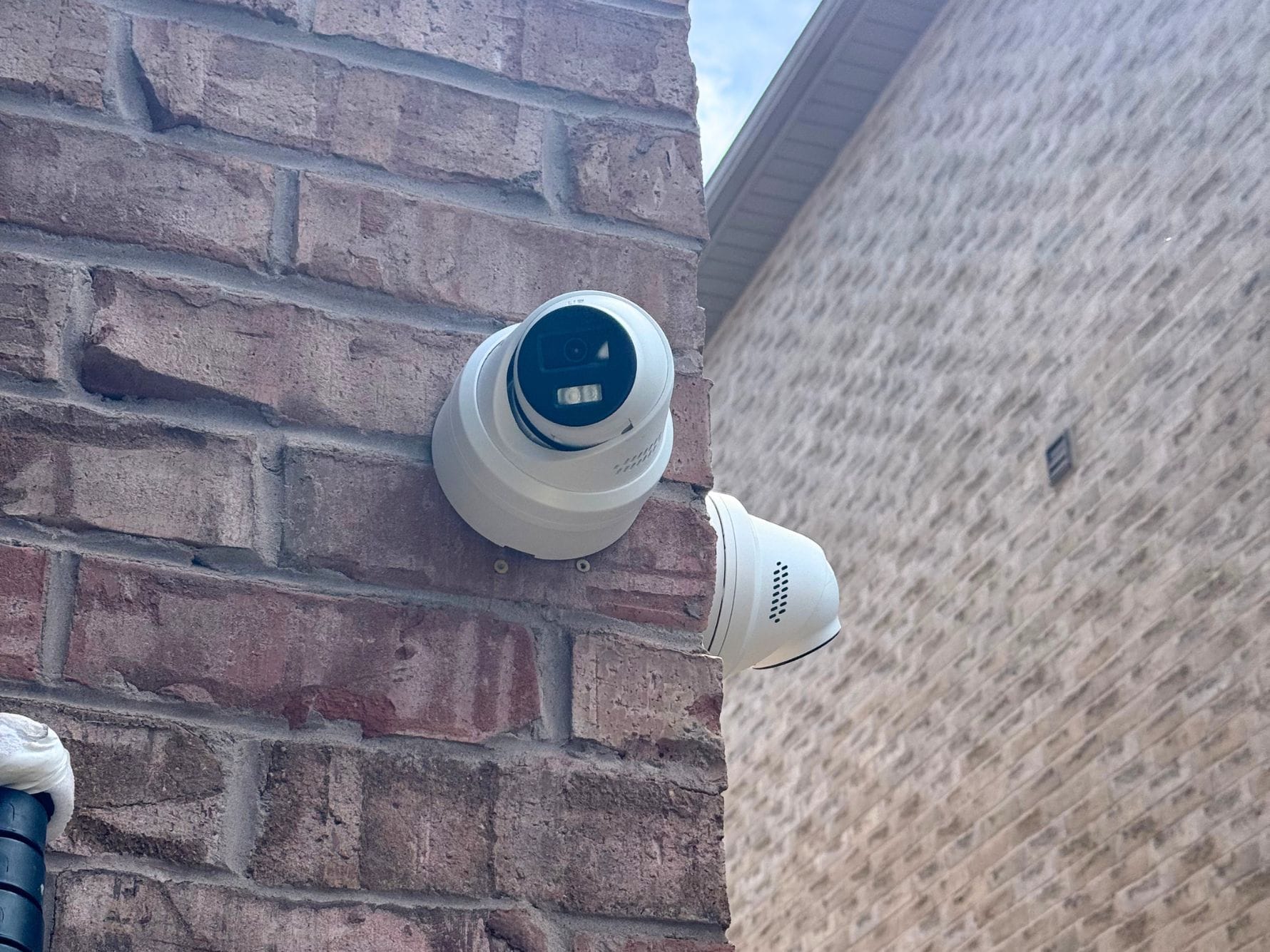
Outdoor Security Camera Placement: Where Should You Install Cameras Around Your Home?
Installing outdoor security cameras can make a noticeable difference in how well you can monitor your property. But having good cameras is only part of the equation. If they are installed in the wrong locations, you can still end up with blind spots or footage that is difficult to use.
The best camera placement depends on the layout of your home, the areas people can access, lighting conditions, and what you actually want the cameras to capture. For homes in Toronto and the GTA, outdoor cameras also need to be installed with changing weather conditions in mind. So, where should you install outdoor security cameras? Here are some of the most important areas to consider.
1. Front Door and Main Entrance
Your front entrance is one of the first areas that should be considered when planning camera coverage. A camera can show who is approaching your home, when a delivery arrives, and what is happening around the entrance when you are away. Depending on the layout, you may use an outdoor camera, a video doorbell, or both.
Try to position the camera so it captures the walkway and the area directly in front of the entrance without pointing straight into a strong light source. The goal is to get a useful view of people approaching the property rather than simply recording the front of the house.
2. Driveway and Garage
The driveway is another important location, especially for homes where vehicles are parked outside. A properly positioned camera can cover vehicles, the garage entrance, and people approaching from the street. If the driveway is long, camera placement becomes even more important. A wide-angle camera may show the entire driveway but may not provide enough detail at a distance.
In some cases, using two cameras from different angles provides better coverage than relying on one camera to cover everything. A garage should also be considered as part of the property’s security plan. If there is an entrance from the garage into the house, it can be useful to monitor both the garage area and the connecting entrance.
3. Side Doors and Gates
Side entrances are easy to overlook because they are usually less visible than the front door. A narrow passage beside the house, side door, or gate can provide access to the backyard and other parts of the property. These areas can also create blind spots if the only camera is positioned at the front.
When choosing a camera for a side entrance, consider the width of the area and the direction people are likely to approach from. A camera does not always need to cover a large area. Sometimes a narrower view provides better detail.
4. Backyard and Patio
Backyards often contain several areas worth monitoring, including patios, decks, sheds, pools, and rear entrances. Instead of simply pointing a camera toward the largest open area, think about how someone would actually move through the property. A camera positioned toward a rear door or pathway may provide more useful footage than one pointed across an empty section of the yard. Trees and landscaping should also be taken into account. A location that looks clear when the camera is installed may become partially blocked as vegetation grows.
5. Outdoor Storage and Detached Structures
If your property has a shed, workshop, detached garage, or other outdoor storage area, these locations may need separate coverage.
Outdoor storage can contain bicycles, tools, equipment, and other valuable items. A camera can monitor the structure itself as well as the path leading toward it.
For larger properties, this can be especially useful because the main house cameras may not provide a clear view of detached areas.
What Makes a Good Outdoor Camera Location?
There are several things to check before installing a camera.
Viewing angle: Make sure the camera captures the area you actually want to monitor. A camera with excellent resolution cannot compensate for a poor angle.
Lighting: Direct sunlight, headlights, and bright exterior lights can affect image quality. Consider how the area looks during both daytime and nighttime.
Height: A camera should be high enough to reduce the chance of tampering, but not so high that faces and other important details become difficult to see.
Weather exposure: Outdoor cameras in Toronto need to handle rain, snow, freezing temperatures, and seasonal changes. Proper equipment and installation are important for long-term reliability.
Power and connectivity: Decide whether a wired PoE camera or a wireless option makes more sense for the property. Cable routing, Wi-Fi coverage, and access to power can all affect the decision.
How Many Outdoor Security Cameras Do You Need?
There is no fixed number that works for every home. A smaller property may only need cameras covering the front entrance, driveway, and backyard. A larger property with multiple entrances, side gates, a detached garage, or a large backyard may require additional cameras. The better approach is to identify potential entry points and blind spots first. From there, you can determine how many cameras are actually necessary. Adding more cameras is not always the answer. The goal is to create useful coverage without unnecessary overlap.
Why Professional Installation Can Make a Difference
Mounting a camera on a wall is relatively simple. Getting the entire system to provide useful coverage is a different matter.
Professional security camera installation in Toronto can help with camera positioning, viewing angles, cable routing, network connectivity, and selecting the right equipment for each location.
For example, a driveway camera may need a different lens and viewing angle than a camera covering a narrow side entrance. A professional installer can also identify blind spots that may not be obvious from inside the house. For homeowners planning a complete system, combining outdoor cameras with other home security solutions can provide additional protection around the property.
Final Thoughts
Good outdoor security camera placement is less about putting cameras everywhere and more about putting them in the right places. Start with the areas that matter most: your front entrance, driveway, garage, side entrances, backyard, gates, and any detached structures. Then consider lighting, viewing angles, weather, and how the cameras will connect to your system.
A well-planned camera system should give you a clear view of the areas you care about without creating unnecessary blind spots or overlapping coverage. If you are unsure where cameras should be installed around your home, a professional assessment can help you choose the right locations and equipment for your property.
Looking for Outdoor Security Camera Installation?
Contact Alarmto today at 1-833-880-4591 to discuss your outdoor security camera needs. We provide professional security camera installation and the GTA, with solutions designed around your property and coverage needs.